







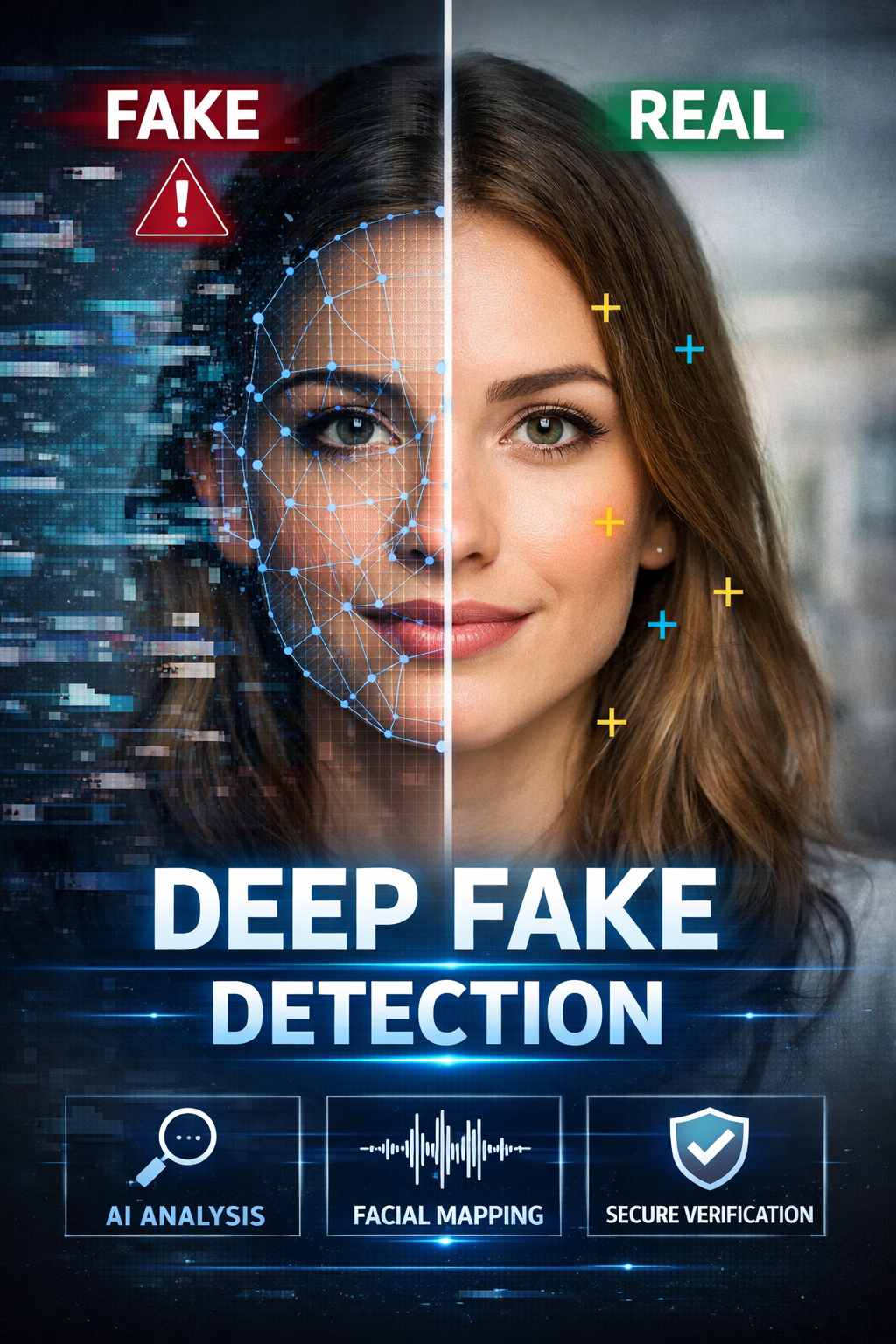
Understanding Deepfake Security
Deepfake technology poses significant security concerns. To mitigate these risks, it is essential to understand what deepfakes are, how they work, and how to prevent their consequences
1️⃣What Are Deepfakes?
Deepfakes are synthetic media in which a person in an existing image or video is replaced with someone else. This is achieved using techniques from machine learning and artificial intelligence to create realistic but fabricated content.
2️⃣The Risks of Deepfakes
Deepfakes can be used maliciously for several purposes, including:
✔️Misinformation and Propaganda: Deepfakes can spread false information, potentially influencing public opinion or inciting violence.
✔️Identity Theft and Fraud: By creating convincing fake videos or audio, deepfakes can be used to impersonate individuals for financial gain or to damage reputations.
✔️Cybersecurity Threats: Deepfakes can be utilized in cyber attacks, such as bypassing biometric security systems or deceiving individuals into revealing sensitive information.
3️⃣Security Measures Against Deepfakes
To address the risks associated with deepfake technology, several strategies and technologies can be employed:
✅Detection Technologies
AI and Machine Learning: Develop algorithms specifically designed to detect inconsistencies and potential deepfakes.
✅Watermarking: Embed digital watermarks into original media, making it easier to detect altered versions.
✅Legal and Regulatory Measures
Legislation: Governments can create laws to prevent the malicious use of deepfakes
✅Public Awareness and Education
Awareness Campaigns: Educating the public about the existence and risks of deepfakes can reduce their impact.
Disclaimer – This post has only been shared for an educational and knowledge-sharing purpose related to Technologies. Information was obtained from the source above source. All rights and credits are reserved for the respective owner(s).
Keep learning and keep growing
Source: LinkedIn
Credits : Mr. Raja R Rout