








Why Security Must Be Proactive, Not Reactive
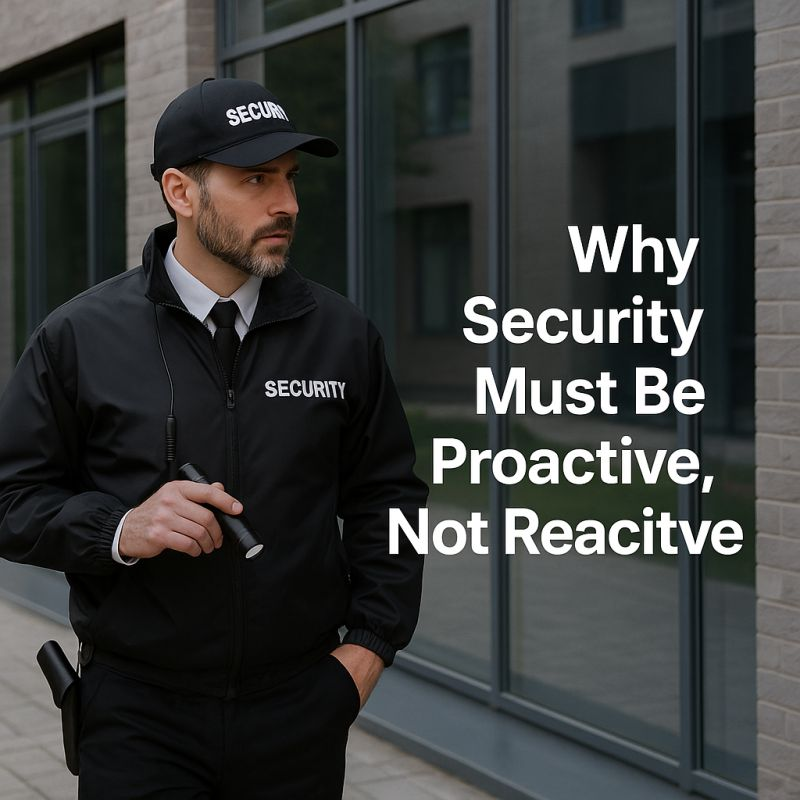
“By the time you react — it’s already too late.”
Most organizations treat security like a fire alarm:
Nothing happens until something happens.
But true professionals know — real security isn’t about responding to threats.
It’s about preventing them.
The Cost of Being Reactive
When security only steps in after the incident:
Evidence is gone.
Trust is broken.
Operations stall.
Reputation takes the hit.
And every reactive policy is a story that started with the same line:
“We didn’t think it would happen here.”
What Proactive Security Looks Like
Threat Assessments Before Incidents
Regular site reviews and digital audits prevent vulnerabilities from becoming headlines.
Training That Anticipates Behaviour
Build muscle memory for de-escalation, not just reaction.
Early Warning Systems
Cameras, analytics, and AI-backed monitoring detect anomalies before they become incidents.
Data-Driven Decisions
Track near-misses, trends, and behavioural patterns — prevention is built from data, not guesses.
Culture of Readiness
Empower staff to identify risks, not ignore them. Every employee is a sensor.
What Proactive Teams See
60% fewer critical incidents
Faster recovery times
Higher client trust and contract renewals
Because reactive security protects after — proactive security protects always.
Takeaway
“Security isn’t a response — it’s a readiness.”
Disclaimer – This post has only been shared for an educational and knowledge-sharing purpose related to Technologies. Information was obtained from the source above source. All rights and credits are reserved for the respective owner(s).
Keep learning and keep growing
Source: LinkedIn
Credits: Mr. John Botes