








CCTV and Artificial Intelligence: The Future of Smarter Surveillance
Introduction: From Watching to Understanding
Closed-Circuit Television (CCTV) cameras have long been silent witnesses — recording streets, stores, offices, and public spaces around the clock. Traditionally, their job was simple: capture footage for human operators to review later. But as cities expand and data volumes explode, the idea of relying solely on human monitoring has become impractical.
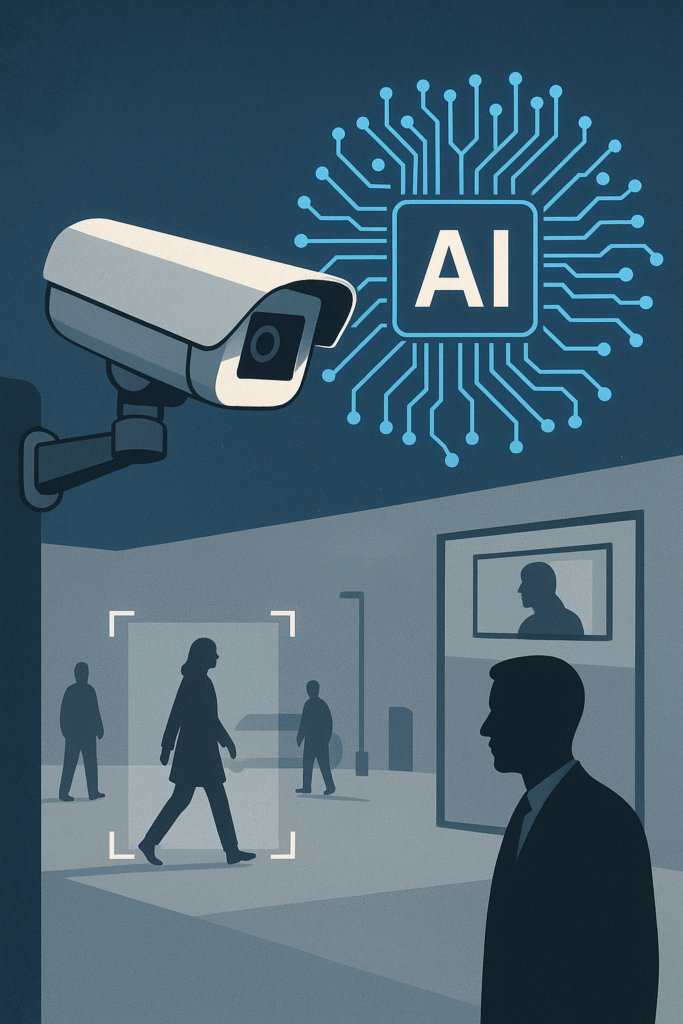
Enter Artificial Intelligence (AI) — a transformative force turning passive cameras into intelligent systems capable of analyzing, interpreting, and even predicting events in real time. The marriage of CCTV and AI marks a new chapter in surveillance technology, reshaping security, efficiency, and privacy in profound ways.
The Evolution of CCTV Technology
CCTV has come a long way since its early analog systems of the 20th century. The transition from tape to digital recording enabled longer storage and higher-quality footage. The introduction of internet connectivity gave rise to IP cameras, which could transmit data anywhere in the world.
Now, with AI integration, cameras are evolving beyond mere observation. Modern systems can detect suspicious behavior, count people, recognize faces, and even read license plates — all without constant human supervision. This shift represents a move from reactive monitoring to proactive intelligence.
How AI Powers Modern Surveillance
AI in CCTV systems relies primarily on computer vision — a field of AI that trains machines to interpret visual information from the world. Using deep learning algorithms and neural networks, these systems can identify patterns, shapes, and anomalies within video feeds.
Some common applications include:
- Facial Recognition: Identifying individuals based on facial features to improve access control or aid in criminal investigations.
- Object Detection: Recognizing specific items like bags, vehicles, or weapons in restricted areas.
- Motion and Behavior Analysis: Detecting unusual movement patterns, loitering, or aggressive behavior.
- Automatic Number Plate Recognition (ANPR): Tracking vehicles for traffic management and law enforcement.
- Crowd Management: Estimating crowd density and movement to improve public safety at events or in transport hubs.
These AI-enhanced functions allow systems to flag potential threats in real time, reducing response times and improving situational awareness for authorities and businesses alike.
Smart Cities and Predictive Surveillance
AI-driven CCTV plays a central role in the rise of smart cities. By integrating surveillance networks with urban data systems, cities can monitor traffic flow, energy use, and public safety more efficiently.
For instance, traffic cameras equipped with AI can automatically adjust signal timings based on congestion levels, while public transport systems can track passenger flow to optimize schedules. In law enforcement, predictive analytics can highlight potential hotspots for crime, allowing for better resource deployment.
However, this growing intelligence raises important questions: how much automation is too much? And how can cities balance efficiency with civil liberties?
The Ethical and Privacy Dilemma
While AI offers enormous benefits, it also introduces serious ethical and privacy concerns. Facial recognition, for example, has sparked global debate about surveillance overreach, data misuse, and algorithmic bias.
Critics warn that without clear regulations, AI surveillance could lead to “digital authoritarianism” — where governments or corporations track individuals without consent. There are also risks of false positives — where innocent people are misidentified or flagged as suspicious due to algorithmic errors or biased training data.
To address these issues, many experts advocate for transparent data governance, strict access controls, and independent auditing of AI systems. Policymakers are also drafting legislation, such as the EU’s AI Act, which aims to regulate high-risk AI applications like biometric surveillance.
Balancing Security and Freedom
The challenge for modern societies is not whether to use AI in surveillance, but how to use it responsibly. When applied ethically, AI-powered CCTV can enhance safety, assist investigations, and even prevent accidents.
For example, AI systems can detect when someone collapses in a public area and alert emergency responders instantly — potentially saving lives. In industrial settings, smart cameras can identify safety violations or equipment malfunctions before they cause harm.
Yet, this must be balanced with citizen rights, data protection, and transparency. Building public trust requires clear communication about what data is collected, how it’s used, and how long it’s stored.
The Road Ahead: Toward Responsible AI Surveillance
As AI continues to evolve, the future of CCTV will likely emphasize collaboration between humans and machines, not replacement. Human judgment remains essential for interpreting context, ethics, and law — areas where AI still falls short.
Next-generation systems will also likely integrate edge computing, processing data locally on devices rather than sending everything to the cloud. This can improve response times and reduce privacy risks by limiting data exposure.
Moreover, researchers are working on privacy-preserving AI, which can blur faces or anonymize individuals in real time unless a verified incident occurs. These innovations could help strike the delicate balance between safety and privacy.
Conclusion: Smarter Eyes, Greater Responsibility
AI has transformed CCTV from a passive recording tool into an intelligent guardian capable of learning, analyzing, and predicting. Its potential to improve public safety, streamline operations, and support smarter cities is undeniable.
However, the same technology that makes surveillance smarter also demands greater responsibility from those who design, deploy, and regulate it. The future of AI-powered CCTV will depend not just on technological advancement, but on our collective ability to ensure that security does not come at the cost of freedom.